The angle we pitched, the follow-ups that kept it alive, the call that booked it, and what I did after the yes.
Quick answer
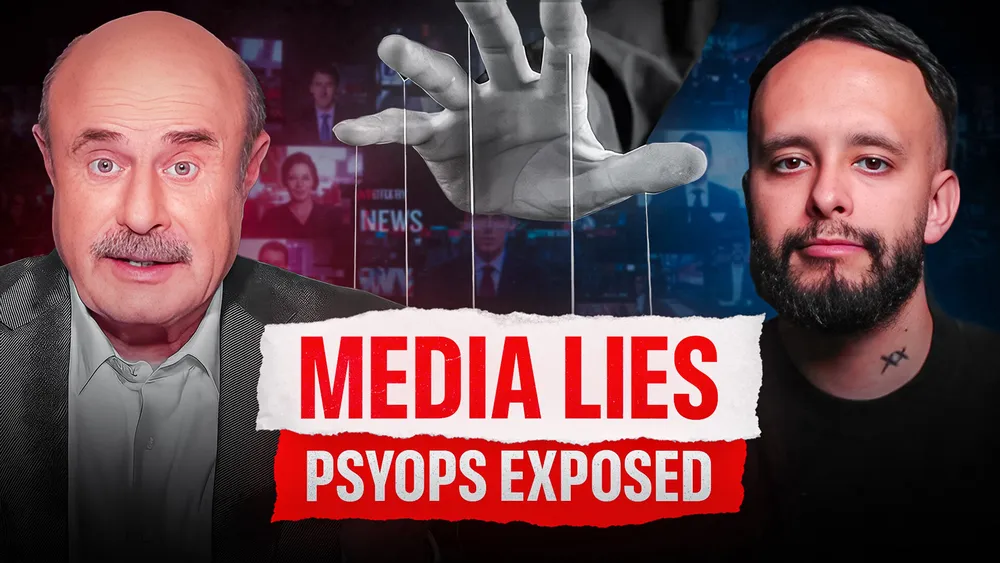
Big podcasts book angles, not names. Rick on my team pitched The Dr. Phil Podcast four times between March and May 2025 on one angle: how media narratives get manufactured. Then nothing for four months. On September 18, 2025, the show’s producer called, and I recorded the next day. The episode, “Media Psyops Exposed,” aired September 24, 2025. It took 200 days from the first pitch to the recording.
Key facts
| Show | The Dr. Phil Podcast (not the Dr. Phil TV show) |
| Episode | Ep. 573, “Media Psyops Exposed: How Narratives Are Manufactured” |
| Who pitched | Rick on my team |
| Pitches sent | 4, from March 3 to May 21, 2025, all in one email thread |
| How it booked | A phone call from the producer, September 18, 2025 |
| Recorded | September 19, 2025, over Zoom, about an hour |
| Aired | September 24, 2025 |
| Episode length | 45 minutes, 19 seconds on YouTube |
| First pitch to recording | 200 days |
| Last follow-up to recording | 121 days |
| Recording to air | 5 days |
What did we pitch?
An angle, not me as a guest. The pitch was about how media narratives get manufactured: how outlets get gamed, how credibility gets faked, and why trust in the media is so low. I could speak to it from my own career. Years ago I placed a story about a 20-year-old selling a company for $100 million. I believed it was real. It wasn’t, and it ran because the sources that checked it out were controlled by the person who made it up. That is the kind of first-hand proof a show like Dr. Phil’s can build an episode around.
On the episode itself, I said it on the record: “I didn’t do it obviously on purpose.” The story is proof of how the system can be gamed, not something I set out to do.
The pitch closed with three things I could break down on air and a soft ask: if there’s a process to apply, we’ll follow it.
How was the first pitch built?
Rick sent it on March 3, 2025, to the show’s team, with me on copy. It ran about 250 words. Here is how it was put together, top to bottom.
- Subject line: the topic, not the guest. It read “How Media Psyops Are Created: Inside the World of Publications.” My name wasn’t in it. It looked like an episode title, not a guest request.
- One line of opening. A greeting to the team, then: “Wanted to run this by to see if it’d be of interest.” No backstory on who we were.
- Two sentences of news context. Before my name came up, the pitch set up why the topic mattered right then.
- Credibility in one sentence. Close to a decade in the media and journalism space, and first-hand knowledge of how these narratives are shaped.
- The proof. The $100 million story, and the fact that it held up because the sources journalists used to check it were controlled by the person behind it.
- Three bullets of what I could break down. One of them, word for word: “The tactics used to manufacture credibility and shape public perception.” The bullets were a ready-made segment outline.
- The ask. “If there’s a process or way to apply, we’d be more than happy to do so and send over all the proof that way too.”
It was written in the third person. Rick was the sender, and I was the subject. That kept the email about the angle and the proof, not about someone asking to be on a show.
How many times did we follow up?
Three times, over almost three months.
- March 3: the first pitch, on the evergreen angle.
- April 24: a plain follow-up restating the angle and offering materials.
- May 19: the same angle, tied to a story that broke that week.
- May 21: the same angle again, tied to a second news story.
The expert and the ask stayed the same every time. Only the news hook changed. Then the thread went quiet for 120 days.
What changed in each follow-up?
Each one was built differently, but every one stayed in the same thread and pointed back at the same angle.
April 24, 52 days after the first pitch. About 120 words, half the length of the original. It opened with “Just wanted to follow up on my previous message regarding Ulyses Osuna as a potential guest.” No news hook and no bullets this time. It restated the $100 million story in a few lines and made one offer: “We’d be happy to share supporting materials or coordinate with your team if this sounds like a fit for an upcoming segment.” The ask moved from “how do we apply” to “here’s what we can send you.”
May 19, 25 days later. About 250 words, back to full length. This one brought new material. The first line said why it was coming back: “Wanted to follow up on our previous message about how media psyops are engineered and bring a new angle that’s playing out in real time.” It tied the angle to a news story that broke that week, used it as a live example of the same thesis, and refreshed the three bullets so they fit that story. It closed with the easiest possible yes: “We can provide everything needed to make it easy on your end.”
May 21, two days later. About 140 words. It opened “One more thing to follow up on what I sent above,” so it read as an addition to the May 19 email, not a new pitch. It tied the same angle to a second news story that broke that week. The credibility line changed to something simpler and current: “he works in PR and speaks to journalists every day.” It had four bullets instead of three, and closed with one line: “Let me know if this is something you’d want to cover.”
What stayed constant across all four: the angle, me as the expert, and a low-pressure ask. What changed: the length, the hook, and the bullets.
What do 120 days of silence mean?
Nothing, on their own. After May 21 there was no reply on record. No “not a fit,” no “maybe later.” There’s no fifth email on record. Then on September 18, 2025, 120 days after the last follow-up, the producer called.
Her voicemail named the email from Rick. On the call, the topics she wanted were the ones from our pitch: how narratives get pushed, how credibility gets manufactured, and the $100 million story. The booking was last minute because a slot had opened up.
I don’t know which of the four emails did it. The topics match the March pitch most closely, but the record doesn’t say whether the show went back to March or picked the thread up from the May follow-ups. What I do know is that the thread was sitting in their inbox, with a clear angle, when they needed a guest on a day’s notice. A pitch that gets no reply can still be working.
How did the booking actually happen?
By phone, not email. On September 18, 2025, a number I didn’t recognize called, and I let it go to voicemail. It was the show’s producer, LaFern Cusack. Her message said she had received an email from Rick about having me on the show, and asked if I was available the next day for an hour, pre-recorded over Zoom. I made sure the call was legitimate, then I called back. That night the show sent a confirmed rundown and a prep file built around the same angle Rick had pitched in March. Email only came into it after the call, for production logistics.
If you’re pitching big shows, check every voicemail. The yes may not come as a reply.
Watch on Instagram: My Instagram post about the voicemail
I posted about it afterward: “About a month ago, I got a call I didn’t recognize. So, naturally, well, I let it go to voicemail. That could have been the biggest fumble of my life because when I played the voicemail back, it was an invite to be on Dr. Phil’s podcast.”
How do you prepare for a major podcast with one day’s notice?
I had less than a day. In my own words from that reel: “So, I called back.” Then: “It was for tomorrow. So, I got good sleep, woke up early, and prepped for 3 hours straight.”
That was the whole plan. Sleep first, then three hours in the morning. Login was 11:45 a.m. Central to start recording at noon.
What was the recording like?
It was a pre-recorded Zoom, about an hour. The morning of, the producer asked me to cover the PR side of the Blake Lively and Justin Baldoni case as an example and record my own audio and video as a backup. During the conversation she could send notes by text, and she did. We covered sponsored content, bot farms, deepfakes, and how to tell when a story is being pushed.
From the reel: “Saw Dr. Phil for the first time. And boom, in an hour it was all done. I sat there for a second thinking, did this really just happen?”
Five days later it was live. On YouTube it runs 45 minutes, 19 seconds, and it had 11,888 views when I checked on November 4, 2026.
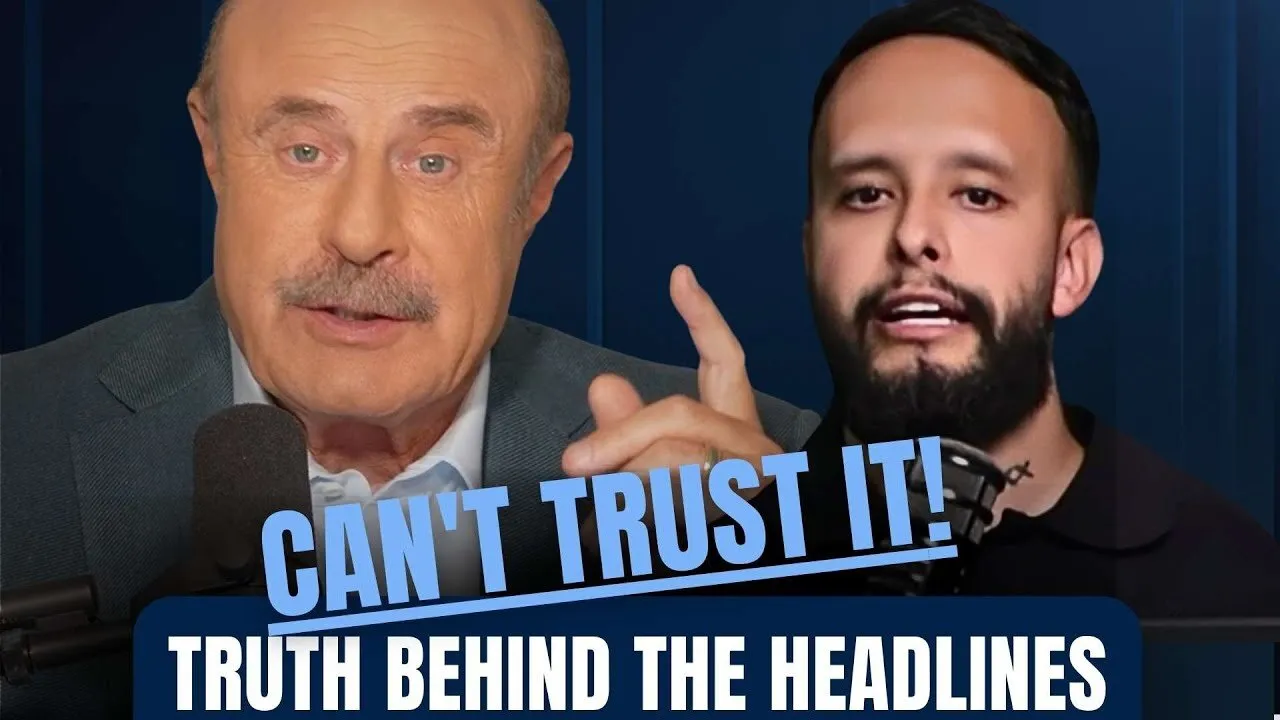
Watch or listen: YouTube · Spotify
What does a big show ask of its guest?
More than showing up. Here is everything the show asked of me, and I said yes to all of it:
- Record my own audio and video as a backup, and send it over.
- Send a high-resolution logo for the on-screen graphics.
- Send a family photo for the end card.
- Cover a specific example on air: the PR side of the Blake Lively and Justin Baldoni case.
None of it was hard. All of it made the producer’s job easier. When my logo needed fixing on screen, she sorted it out with the editor.
What did I do after the yes?
I sent the backup recording the same day and offered two things for free: a Times Square billboard, without using Dr. Phil’s likeness, and a press release announcing the episode. In my email I said the billboard “won’t use Dr. Phil’s likeness.” The producer asked for the billboard specs and said announcing the episode would be fantastic. I sent the specs and the press release plan on September 22, two days before the episode went live. I also offered to place Dr. Phil in Psychology Today. When the episode aired, I posted it and put money behind it.
On October 11, the producer sent over the episode promo and introduced me to Greg Neal at Envoy, Dr. Phil’s new venture, where he runs marketing and creative. I replied offering to help with the launch, in my words: “Including doing the Billboard.”
The billboard was offered for Dr. Phil, and the show later wanted to use it for Envoy instead. The billboard never ran. On February 18, 2026, I wrote to the producer, said plainly that the billboard never got done, offered it again for free, and shared a list of guests I thought would fit the show. I nudged on February 23. I haven’t heard back yet.
That is the honest state of it. The episode happened. The relationship after it has gone quiet, the same way the pitch thread did in 2025. As I said in the reel: “after one big moment, the clock resets. You got to earn the next one.”
Should you pitch yourself or have someone pitch you?
In this case, someone on my team pitched me. Rick sent all four emails, I was copied, and every one was written about me in the third person. When the producer called, she named Rick’s email, not me. The pitch did the introducing, so the first conversation I had with the show was already about the topic.
How do you get booked on a major podcast?
- Pitch an angle the show can build an episode around. Big shows book angles. Your name is the proof, not the pitch. Our subject line was a topic, and my name wasn’t in it.
- Bring first-hand proof. Something you lived, not something you read. Mine was a $100 million story I placed believing it was real.
- Hand them the segment. Three bullets of what you can break down on air. Ours were refreshed every time the hook changed.
- Follow up for months, not days. Four touches over three months kept this one alive. The second email was half the length of the first.
- Re-anchor the same angle to the news. Keep the expert and the ask the same, change the hook. Two of our four emails were tied to a story that broke that week.
- Expect a call. Bookings at this level often come by phone, last minute. Ours came 120 days after the last email, for the next day.
- Be the easiest guest they’ve had. Say yes to every production ask: backup recording, logo, photo, topic.
- Give something back. Offer what you’re good at, with nothing attached. For me that was a billboard, a press release and a placement offer.
Can you get on a show this size without being well known?
Yes, but only with an angle they want and proof only you have. That is what booked this one. It still took 200 days, four emails and a phone call that went to voicemail first.
FAQ
How do you get on The Dr. Phil Podcast?
Pitch the producers an angle they can build an episode around, back it with first-hand proof, and follow up over months. In this case, four pitches between March and May 2025 led to a call from the show’s producer in September 2025.
Is The Dr. Phil Podcast the same as the Dr. Phil TV show?
No. Episode 573 was on The Dr. Phil Podcast, not the Dr. Phil TV show.
How long does it take to get booked on a major podcast?
It varies. This booking took 200 days from the first pitch to the recording, with 120 days of silence after the last follow-up.
What was Episode 573 about?
“Media Psyops Exposed: How Narratives Are Manufactured” covered how media narratives get manufactured, sponsored content, bot farms and deepfakes. It aired September 24, 2025.
Who sent the pitch to The Dr. Phil Podcast?
Rick on my team. He sent all four emails between March 3 and May 21, 2025, written about me in the third person, with me on copy. The producer’s voicemail named his email.
Which pitch booked the episode?
I don’t know. The booked topics match the first pitch from March 3, 2025, but the record doesn’t show whether the show acted on that email or on the May follow-ups in the same thread.
Did the show reply to the pitch by email?
No. There was no reply on record to any of the four emails. The producer called on September 18, 2025, and email only started after that, for logistics.
How much notice did I get before recording?
Less than a day. The call came on September 18, 2025, and I recorded at noon Central the next day. The episode went live five days after that.
Did the Times Square billboard for Dr. Phil run?
No. I offered it free, for Dr. Phil, without using his likeness. The show later wanted it for Envoy instead, and it never ran. I offered it again in February 2026 and haven’t heard back yet.
Work with us
Influencer Press places founders and creators in major publications, on TV, on podcasts, on Times Square billboards and on stages, and makes sure what search engines and AI say about them is accurate. If you want help with any of it, you can apply to work with Influencer Press.
About the author
Ulyses Osuna founded Influencer Press at 19 and has run it for nearly a decade, placing founders and creators in major outlets, on TV, on podcasts and on Times Square billboards. He has appeared on The Dr. Phil Podcast, been a panelist on Nasdaq TradeTalks, and spoke at Harvard Kennedy School in 2026. More: about, methodology, transparency.
More outlet guides
- How Helping an Entrepreneur.com Editor With Her Pet Brand Led to a 4-Part Video Series
- We Pitched 52 Media Contacts on Shakira’s World Cup Halftime Dancers. Here’s What Happened.
- What I Told Dr. Phil on The Dr. Phil Podcast About How Media Narratives Get Manufactured
- What It Means to Be an Entrepreneur: The $5,000 Sponsored Video That Got 26,000 Views on Entrepreneur’s Facebook Page
- How I Almost Got a Speaking Slot at Relentless IV, the Event Kobe Bryant Headlined
- How I Got on Business Rockstars, My First TV Appearance, and Got My Clients on the Show
- How I Got on the Entrepreneur.com Homepage Through The Jeff Fenster Show
- How I Lived in a $29,500-a-Month Hollywood Hills Mansion for 30 Days in Exchange for PR