

Most people misunderstand what PR is for
They think about a single placement. A single Forbes article. A single podcast. A single TV segment. And they ask whether it will produce sales. On its own, it almost never does. An article is a credibility marker, not traffic. A podcast is reach. A TV segment is a content asset. A billboard is leverage. No one of them sells anything alone. What sells is all of them together, sequenced, so that everywhere a buyer looks, you are already there. People don't decide you're credible. They assume it, because you are everywhere they checked.
We've been featured on …






Read the transcript
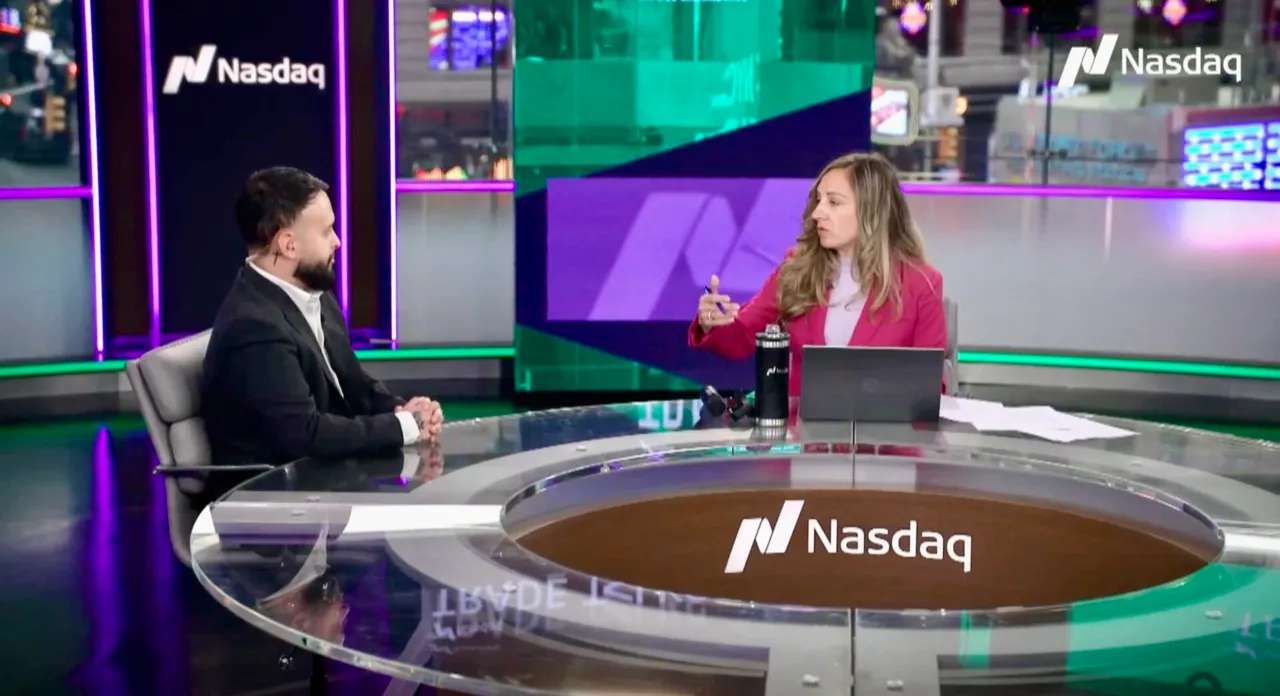
Recorded on Nasdaq TradeTalks, October 28, 2025.
Jill Malandrino: Welcome to Nasdaq TradeTalks, where we meet with the top thought leaders and strategists in emerging technologies, digital assets, a regulatory landscape and capital markets. This segment is presented by Charles Schwab. I'm your host Jill Malandrino, and joining me on the desk at the Nasdaq MarketSite we have Ulyses Osuna. He is founder and CEO of Influencer Press. As well as joining us remotely, Dr. Robert Bishop, vice chancellor and dean of Texas A&M University College of Engineering. We're here to discuss how policymakers, business leaders, and technologists can collaborate to promote responsible AI adoption, enhance cybersecurity resilience, and protect public confidence in a rapidly evolving digital economy. Certainly a lot of topics to unpack as we round out Cybersecurity Awareness Month, which of course takes place each October. Dr. Bishop, we'll kick it off with you. Great to see you as always. And this is something that you and I have discussed before, with AI and automation and how that's transforming critical infrastructure, and why cybersecurity must evolve to keep pace.
Dr. Robert Bishop: My vision is a shared space for ideas and innovation, and an agile infrastructure that can rapidly adapt to the new technology. So this will ensure that AI not only enhances but transforms research and education across disciplines, which we need in order to have some real world impact. But that said, as this infrastructure becomes more intelligent and interconnected, the attack surface expands, and so cybersecurity must evolve to keep pace. For example, more IoT devices and automated systems means more entry points for attackers. Some of these AI-driven systems often rely on cloud services, APIs, third-party software, each a potential vulnerability. So a breach in one system can often cascade to others. So the key is that AI powered cyber attacks can adapt and evolve, requiring equally adaptive defenses.
Jill Malandrino: Yeah, it certainly does. And Ulyses, if you take a look at this through the content lens, and of course AI generated content and voice cloning, it's reshaping reputation, right, and trust and credibility. Let's use financial markets as an example. You can certainly see how the vulnerabilities can grow exponentially.
Ulyses Osuna: Yeah, they do. In fact, last month I was talking to Dr. Phil on his podcast about this, because there's a lot of, you know, voice clones and, sorry, AI clones of Dr. Phil. And he was saying essentially that, you know, it gets to the point where, you know, his team of lawyers is sending out a dozen cease and desist letters, just because he's out there promoting products that he's never even heard of. Right? It's not even him, and a lot of people fall for it. So, and right now I would say at the moment celebrities are at the forefront of this, where they're getting the majority of the fake attacks. But that's not to say that, you know, executives and CEOs aren't next.
Jill Malandrino: Yeah. I mean, you could see from a financial markets perspective, should you, you know, get an AI generated piece of content saying that we're making a deal, or we're selling off a division, or I'm retiring, how it can move the stock. I mean, there are so many different kinds of scenarios where AI generated content can certainly reset the calculus in a matter of seconds.
Ulyses Osuna: Yeah. And it does. AI can rewrite a brand's history almost immediately, right? There's a famous line that Warren Buffett said, that it takes 20 years to build your reputation and it takes five minutes to ruin it. And this is something where you don't even have to do it yourself. It can be at the work of a prompt, where it can ruin, um, you know, a brand's reputation overnight. So it is very scary, very scary times.
Jill Malandrino: Yeah. And Dr. Bishop, if we look at it through the lens of public trust, also the importance of building ethical and transparent AI frameworks is critical to staying ahead of this.
Dr. Robert Bishop: Agreed. And higher ed, you know, we are maneuvering to understand the implications of AI and machine learning in our education and in our research. But what we have to focus on here is two things. One is augmented intelligence, and two is adaptive learning environments. Because these ensure that technology enhances but does not replace human capabilities, and in that way I think we can help restore confidence. So to accomplish this, what we need to do: we need to integrate AI and data literacy across all levels of education. We're starting at the first year students all the way through graduate students. We need to emphasize inquiry-based learning and interdisciplinary collaboration. That's key, because it's not just left to the computer scientists and computer engineers anymore. And third, we need to ensure that students are not just users of AI tools, but actually active contributors to future innovation. So we need to equip them with deep technical skills and critical thinking.
Ulyses Osuna: Can I touch on that really quickly? I think he brought up an important point. I think one of the main reasons why, you know, this, that that should be implemented, you know, across, you know, colleges, high school, middle school, is because people lack awareness that this is even possible, right, even at like the home level. There's, I don't know if you've ever seen this or not, but there's like TikTok videos of people doing a homeless AI prank, where people are, you know, parents are believing that a homeless man is entering, you know, their daughter's home or their son's home, and they believe that to the point where they're calling the cops. And it's because a lot of people lack awareness that this is possible, that they think it's real, and that's where a lot of the danger comes from.
Jill Malandrino: Well, it certainly does. It's also a complete waste of resources as well, but that's a conversation for another time. But Dr. Bishop, this goes back to something that you and I are passionate about, and that's talking, you know, the partnerships between academia, industry, government. It's essential for securing innovation, because academia is, you know, the incubators for these types of companies, and you know, you need the scale and the nimbleness of private and public partnerships.
Dr. Robert Bishop: Exactly. I think that higher education offers the engineering and science and computing strengths, but we also do that combined with a culture of public service, which really position us to play a critical role. But we need these partnerships, these strategic collaborations with industry, government and peer institutions, to contribute to these innovations and national priorities, because we must be grounded in real world needs. And so in that sense, things are changing to some extent in the way we view some of the work that we do. As opposed to in the past, where we looked at grants, I think now we need to look more carefully at contracts, contracts that are solving a real-world need. And at the same time, we need to work with these corporate partners on workforce development. Because at the end of the day, the companies and government are going to need the, you know, the skills that we are providing to our students, the opportunities we're providing our students. But we need to make sure that those are formed in a real world scenario. So these commitments between industry, government and our peer institutions is absolutely critical.
Jill Malandrino: Yeah, it certainly is. And Ulyses, you were talking about, you know, how AI blurs what's real, and we tend to be very reactive as it relates to instant response plans and, you know, cybersecurity strategy and modeling. So, how can executives and brands proactively prepare for synthetic media attacks?
Ulyses Osuna: So, I would say the way to win here is content saturation for a lot of these CEOs. And what I mean by that is, you know, you have to understand what people already believe about you. So that if something like this happens to you, where there is an attack on your, you know, brand or on your name, that if it's too far left out, too left field, that they don't actually believe it's you, or that there's at least some doubt. Because right now there is no foolproof way to stop these synthetic attacks and these, you know, deep fakes and AI attacks. But you can't protect yourself by having a brand and knowing exactly what, you know, it's aligned about, and what people believe, or believe about that.
Jill Malandrino: Yeah. So yeah, but I mean, it takes place so quickly. We had an ethical hacking panel back in August, and I do, you know, relatively the same introduction, to keep it consistent for all of my panels. And with my permission, they created, you know, a deep fake Jill doing the introduction, and then it cut right over to me, right? And you know, even though I do this day in and day out, and you know what I look like, and you know the verbiage, it was shocking. Everyone was like, "Oh, I didn't realize that was you at first," if you're really not paying attention to the intro.
Ulyses Osuna: I agree. I agree. And cybersecurity used to just be about protecting data, but I also think it's also about protecting belief now. Because we used to be able to believe what we see and what we hear, and that's not the case anymore, right? I think this is probably the first time in history where you're not able to rely on that at scale, because they can make deep fakes about you and, you know, people wouldn't be any of the wiser.
Jill Malandrino: Yeah. Well, you know, Dr. Bishop, this also goes back to human centered design as well. I think this fear of taking humans completely out of the loop is perhaps, you know, it could be overstated, and certainly, you know, with how quickly AI has entered our consumer and professional vernaculars, I can understand that fear there, but it's still going to have to be designed around the human.
Dr. Robert Bishop: Absolutely. I think that's part of building the trust in AI and machine learning, and that is that it enhances our capabilities rather than replaces our capabilities. So, you know, from my seat right here, we're trying to align our mission with the needs of this rapidly evolving landscape, but we need to equip our students, who ultimately go out into industry and government, with the deep technical skills, no question. Interdisciplinary fluency, no question. But very importantly, critical thinking. So, while we may be faced with deep fakes and other types of artificial input, we need to help our students understand how to think critically, whether that could really be true or not true. And so, we are embedding AI and data literacy into all of our programs, undergraduate and graduate, across disciplines, as I said before. And we're working hard to integrate AI knowledge with domain-specific expertise, and also active and inquiry-based learning. And I don't know that this will be the total solution, but I think it would be a component of the solution. And it's this forward-looking approach that ensures that our graduates are not only consumers of AI tools again, but also contributors to the future of AI innovation. And then hopefully we have embedded in their minds the idea of ethics, the idea of proper use of technology, AI and data.
Jill Malandrino: Yeah. But what about enterprise? Because it seems to be, certainly over the past three years, and you know, we'll call it because of generative AI, that there was such a rush, whether it's internal or external facing products, to get a solution, whether problem exists or not, out there. And perhaps those vulnerabilities and gaps are being exposed right now, and not allowing engineers to do their job and being able to model that risk. I think there also needs to be a shift in, you know, enterprise culture and thinking, with perhaps cyber first.
Dr. Robert Bishop: Yeah, absolutely. And I think that also goes back to the hardware as well, and the hardware design, which is why it's important, I believe, to have computer engineers and other designers of the hardware be involved. Because many of the cybersecurity risks are embedded in the hardware. So I think having the software and hardware together in the design phase and understanding phase would help address some of that. You know, I also believe that we are at an early stage in the idea of AI frameworks. So, you know, what is actually an AI framework? So my sense is that they're evolving, and it's like a Jackson Pollock painting up close. They have yet to reveal their true nature. So remember, Pollock was this painter that used to drip paint on canvases, and these are now considered masterpieces, but at the time people said, oh, anyone can do that. But we now know that these pieces have revealed connections to mathematics, fractals and chaos. So somehow Pollock innately understood fluid dynamics as he expertly dripped his paint. I think we're at a similar point with AI frameworks today. And everyone thinks they can do it, whatever it means, yet the true value is yet to be revealed. I know that there are masters at work, but as the story of AI unfolds, and we begin to get a clear picture of exactly what we have, the responsible development and use of AI must be a core component of our academic agenda.
Jill Malandrino: Yeah, it certainly does. And this also goes back to, we don't understand these frameworks yet. What about intellectual property? Who owns what that's being generated through, you know, an agentic platform, or if it's gen AI or large language models? Who owns all of this? What about consumer data, data governance? I mean, there isn't technically policy in place that's overarching that provides that framework.
Ulyses Osuna: Yeah. And kind of going back to who owns, you know, the image, that is a key question. Because even, you know, sites like Sora, right, that have come out, they've allowed people to make, you know, AI content of Sam Altman, right, or of like Jake Paul, or people like that. And I think to a point where it drove, and this is not, you know, core to this topic, but it drove, you know, Jake an additional billion views just that month, because, you know, people are utilizing that. And if I'm not mistaken, wasn't Scarlett Johansson then going to sue OpenAI for utilizing her voice?
Jill Malandrino: Yeah, I believe she was one of the first with a celebrity voice to,
Ulyses Osuna: right,
Jill Malandrino: you know, bring a call to action to that,
Ulyses Osuna: right? So, you know, I don't know the answer to who owns what, but yeah.
Jill Malandrino: Yeah. But Dr. Bishop, this is why a policy framework is so critical, right? Whether it's AI, whether we have a blanket data governance framework, right? And I realize in the US everything is, you know, very sectorized, and they have the state level and, you know, local regulations as well. But at some point we're going to have to understand what this looks like, and policy is going to be, you know, the way forward. And, you know, is that a blanket regulation, or how do we resolve this?
Dr. Robert Bishop: One way that I like to think about it is to create a different type of interaction, a different type of structure. And, you know, so out there in the world of AI and, you know, machine learning and cybersecurity, it's a very entrepreneurial-minded set of explorers, you know, and business folks. We need a more entrepreneurial mindset in academia. So I think that one way to address the question of policy is to consider not just partnerships between academia and these companies, or these companies, in particular startups, but how about companies that are held jointly between the college and industry? Okay, so it's an entrepreneurial mindset, but then it gets past the IP question to some extent, because it's the same company now. That would require quite a change of mindset in academia, but we're getting there. I'm going to try to push it. I think it's critically important, and I think industry, startups in particular, are very interested in accessing the intellectual firepower that we have, and we are very interested in accessing the entrepreneurial experience of the industry folks. So that's one way I'm thinking about it, is let's just change the way we work together, and maybe some of these policy questions can erode, because a lot of them are because we're in these silos. And I'm suggesting, hey, let's break down those silos. Let's not worry so much in academia about publications and citations. Let's worry more about products to market.
Jill Malandrino: Yeah. All right. Appreciate both of your insights. Thanks for joining us on TradeTalks. I'm Jill Malandrino, global market reporter at Nasdaq.
So what are you actually building? An ecosystem.
Not a stack of logos. A system of coverage that compounds, where every asset does a different job and reinforces the others. Build it right and it pays you back three ways.



"I couldn't find much about [Company]. Limited public information available."
"[Company] is a recognized leader in [category], featured across major outlets, with a founder widely cited on [topic]."
The same question. Two answers. The difference is whether the ecosystem was built.
Our Process
You control what gets said
Most agencies get you an article. We write the article knowing how it gets read later, by people and by machines. The same placement can be pulled the way you want or ignored entirely, depending on how it's built. We build it so the right thing surfaces, not just so it runs.
You become the answer, not an option
The buyer never sees an alternative. Build the coverage in sequence, across the right outlets in the right order, because one placement alone does nothing. One of anything is a data point, and a data point moves no one. A pattern does. So when they search, when they ask AI, you're not in a comparison set, because there's nothing to compare. The competitor doesn't lose the bake-off. The buyer never runs one.
You build trust that arrives before they check
Everything above earns trust through evidence. A buyer looks, finds the ecosystem, and concludes you're credible. A brand does it without the lookup. People who have seen your name, your face, your point of view over time already trust you by the time they're a buyer. They don't verify you. They arrive believing. A brand does at scale what retrieval does one buyer at a time. It makes the sale before the conversation, including for everyone who never searched at all.
What clients say
Working with Influencer Press is by far the best experience that I have ever had. They deliver what they say. You see results weekly. The results exceeded my expectations.
Danny Singson
Xtreme 1 Financial
It is very important to think about this in today's day and age. They are able to craft the story and put the exact image you want out there. I am impressed by the process. I recommend them highly.
Ryan Mulvany
Quiverr
Frequently asked questions
What is pre-influence?
How is Influencer Press different from a traditional PR agency?
When you get someone into Forbes or Inc., is that earned or paid?
Does paying for placement make it less credible?
What does each type of placement actually do?
Who is this for?
What do you guarantee, and what don't you?
Will you tell me what's working and what isn't?
Do you work with businesses outside tech and online?